

 Beverlee Rasmussen
 A founder postpones payroll decisions because cash is tight. A growing firm has no clear process for onboarding new employees. A marketing agency owner is working nights because every client issue still comes through them. These situations show why the difference between executive and small business coaching is about more than the client’s job title. They shape what a coach needs to notice, ask, and help a client put into action.
Both disciplines rely on strong coaching skills, ethical practice, and a belief that clients can think and decide for themselves. Yet the business context is different. Professionals who work with entrepreneurs also need to understand the business context around those coaching conversations. In a small business, decisions in one area can quickly affect everything from cash flow to staffing.

Executive Versus Small Business Coaching: The Core Difference
Executive coaching most often supports leaders within established organizations. The client may be a senior executive, an emerging leader, or a manager taking on broader responsibility. Common topics include leadership presence, strategic influence, communication, delegation, stakeholder relationships, and career transitions.
The executive typically operates within a larger structure. There may be a board, leadership team, human resources department, finance function, and established policies and procedures. The coach helps the leader improve how they lead within that environment. Organizational goals and sponsorship arrangements may also influence the coaching engagement.
Small business coaching serves a different client reality. The owner may be the chief executive, salesperson, operations manager, financial decision-maker, and problem solver all at once. In a business with fewer than 100 employees, a single delayed decision can affect cash flow, customer service, team morale, and the owner’s personal capacity.
Small business owners do not need a coach to make every decision for them. A skilled coach respects what the owner already knows about their market, customers, and risks. It gives the owner room to examine assumptions and consider different options before deciding what to do. The difference is that the conversation often needs to account for practical business conditions that are immediately connected.
Small Business Problems Are Usually Systems Problems

A small business owner may initially ask for help with hiring, sales, time management, or profitability. The presenting issue is real, but it is rarely isolated.
Consider an owner who says, “My team keeps making mistakes.” The cause may involve unclear roles, inconsistent training, missing documentation, rushed hiring, weak communication habits, or a service model that has outgrown the business’s capacity. Coaching only the owner’s leadership confidence may help, but it may not address the system producing the problem.
Systems thinking gives a small business coach a broader way to look at the problem. It helps the coach explore how leadership, operations, marketing, finance, team practices, and customer experience influence one another. A systems approach does not require the coach to become an accountant, attorney, or management consultant. The coach needs to help the owner see how different parts of the business affect one another and decide what deserves attention.
For example, a coach might ask how a recent increase in sales has affected delivery capacity, accounts receivable, staffing, and the owner’s schedule. Those questions can reveal whether growth is creating healthy momentum or merely adding pressure. From there, practical tools can help the owner decide what needs attention first. They may also help clarify responsibilities or create simple policies and procedures that prevent the same confusion from happening again.
Where the Disciplines Overlap
Executive and small business coaching share a meaningful foundation. Both call for active listening, powerful questions, clear agreements, accountability, and respect for client autonomy. Both benefit from the International Coaching Federation, or ICF, competencies and ethical standards.
Leadership also matters in both settings. A small business owner may need to communicate expectations more clearly, address conflict directly, trust employees with responsibility, or make difficult decisions. These are leadership conversations, even when the client does not use leadership language.

That shared foundation means executive coach training can be a useful starting point for someone entering the field. It can build coaching presence and strengthen the ability to support human change. But a general executive coaching program may not prepare a professional to recognize the operational and financial pressures facing an owner who has no internal support department and limited room for costly mistakes.
That gap matters when clients bring questions about pricing, capacity, cash flow, employee roles, business planning, marketing, or workflow. The coach does not need to have owned every type of business. They do need enough understanding of small business to ask relevant questions, stay within their scope, and help clients turn insight into action.
Coaching, Consulting, and Advice Have Different Roles
Small business professionals often wear more than one hat. An accountant may identify financial concerns. An economic development professional may connect an owner to capital or local resources. A marketing agency owner may advise on campaigns and positioning. A consultant may recommend a process or technology solution.
Those contributions can be valuable. They are not the same as coaching.
A coach approach centers the client’s thinking. Rather than immediately prescribing a solution, the coach may ask what the owner has already tried and what evidence they have. They might explore the trade-offs involved and what outcome matters most to the owner. The owner remains responsible for the decision.
Sometimes the client may need expertise, information, or a referral. A capable small business coach can name that need clearly and shift roles only with agreement. For instance, a coach who is also a financial professional may separate coaching from advisory work, clarify the purpose of the conversation, and avoid presenting advice as a client-generated insight. This protects trust and supports ethical practice.
What to Look for in Small Business Coach Training

The right training depends on your professional background and the work you want to do. An experienced executive coach moving toward entrepreneurship support may need business-specific frameworks and practice applying coaching skills to owner challenges. A consultant or former owner may need deeper coaching training so they can move beyond giving answers. A newcomer may need both foundations.
A specialized program could be especially useful when it combines several elements:
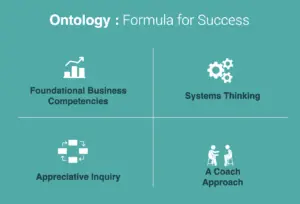
- ICF-aligned coaching skills and ethical standards that support credible, client-centered practice.
- Systems thinking that connects owner leadership with operations, finance, marketing, and team performance.
- Appreciative inquiry that helps clients recognize strengths, possibilities, and progress without ignoring real constraints.
- Practical tools that help turn conversations into priorities, experiments, actions, and repeatable business practices.
Look beyond the course title. Ask whether the training addresses the realities of businesses with fewer than 100 employees. Does it include practice coaching on issues such as cash flow pressure, unclear roles, sales inconsistency, owner overload, and growth decisions? Does it help you distinguish coaching from consulting? Does it offer pathways for ICF credential goals if that is part of your plan?
Small Business Coach Training is designed around this specialization, combining ICF-accredited pathways with a systems-based methodology for professionals who want to help owners build an organized and profitable business.
Choosing the Right Path for Your Clients
Executive coaching may be the better fit when your work centers on leaders in larger organizations, leadership transitions, or enterprise-wide influence. It can also serve entrepreneurs who are primarily seeking personal leadership development and already have strong operational support around them.
Small business coaching may be the better fit when your clients are owners carrying responsibility for the full business. They may need to improve their leadership, but they also need to see how their goals connect to capacity, customer experience, team systems, profitability, and daily execution.
Neither approach is inherently better. The better fit depends on the client and the business environment around them. An owner with 12 employees has a different set of choices than a vice president with access to a finance team, human resources partner, and established operating procedures. Understanding that context helps the coach ask better questions and keep the conversation grounded in what the client is actually dealing with.
For professionals who already serve entrepreneurs, specialized training may also make work more sustainable. Instead of trying to be the expert in every business issue, you can rely on a clear method, practical resources, and disciplined coaching skills. That gives clients room to lead their own businesses while giving you a structured way to support meaningful progress.
Small business owners bring courage, resourcefulness, and deep knowledge of the people they serve. ffective coaches meet that capability with thoughtful questions and a clear view of the business system. The result is a conversation that can lead to practical next steps the owner can carry forward.
Want to Strengthen the Way You Support Small Business Owners?
If you work with small business owners and want to explore how coaching skills can strengthen those conversations, book a 30-minute conversation with Systems Business Coach® founder Beverlee Rasmussen.
Together, you can explore how small business coach training could support the work you already do and help you bring a more intentional coach approach to the owners you serve.