

 Beverlee Rasmussen
 Small business owners rarely describe their need as “I need coaching.” They talk about long hours, tight cash flow, inconsistent marketing, employees who are not following through, or too many decisions landing on one person. A clear business coaching niche helps the right owners recognise that you understand their situation and can help them think through it.
A niche is a practical promise: who you serve, the business situations you understand, and the progress your coaching can support. For business coaches, consultants, accountants, economic-development professionals, agency owners, and former owners, a well-defined niche makes referrals easier, marketing more focused, and client conversations more relevant.
Start With the Owners You Understand
Small business covers a wide range of organisations. Owners often share distinctive realities: limited time, limited capacity, responsibility for cash flow and customers, and a constant need to make decisions across the whole operation. A staffing concern can affect customer service. Weak pricing can affect cash flow. Unclear roles can keep the owner involved in every daily decision.
That interconnectedness is why small business coaching differs from generic coaching. You do not need to provide every answer. A coach approach helps owners think, decide, and act for themselves. You do need enough business context to recognise when a problem involving time management may connect to delegation, policies and procedures, team communication, or an unclear business model.
Begin with the owners with whom you can build trust. You may know retail, professional services, manufacturing, construction, health and wellness, creative businesses, or community-based enterprises. Your experience may be in startups, second-stage businesses, family businesses, or the point where an owner needs to build a team.
Industry experience can be useful, and it is not the only way to specialise. You can focus on a business stage, a recurring challenge, or the professional relationship you offer. The aim is a clear focus that an owner can recognise and a client base you can serve sustainably.
Build a Business Coaching Niche Around Real Problems
A strong niche combines a defined audience with a meaningful business need. “I coach entrepreneurs” is broad. “I help service-based small business owners build the systems and leadership habits needed to grow without carrying every decision themselves” tells a more useful story.
Your niche can sit at the intersection of three factors:
- The people you want to serve
- The business situations you understand
- The coaching work you want to do repeatedly
Look for patterns in your past roles, client conversations, volunteer work, or business ownership experience. What do people already ask you about? Which challenges hold your attention? Where can your knowledge support better questions rather than turn every conversation into advice?
An accountant may be well positioned to coach owners who avoid financial decisions, provided they distinguish coaching from technical financial advice. A marketing agency owner may focus on helping clients turn scattered promotion into a consistent sales and marketing system. An economic-development professional may support local entrepreneurs who need clearer goals, stronger operations, and more confidence in their decision-making.
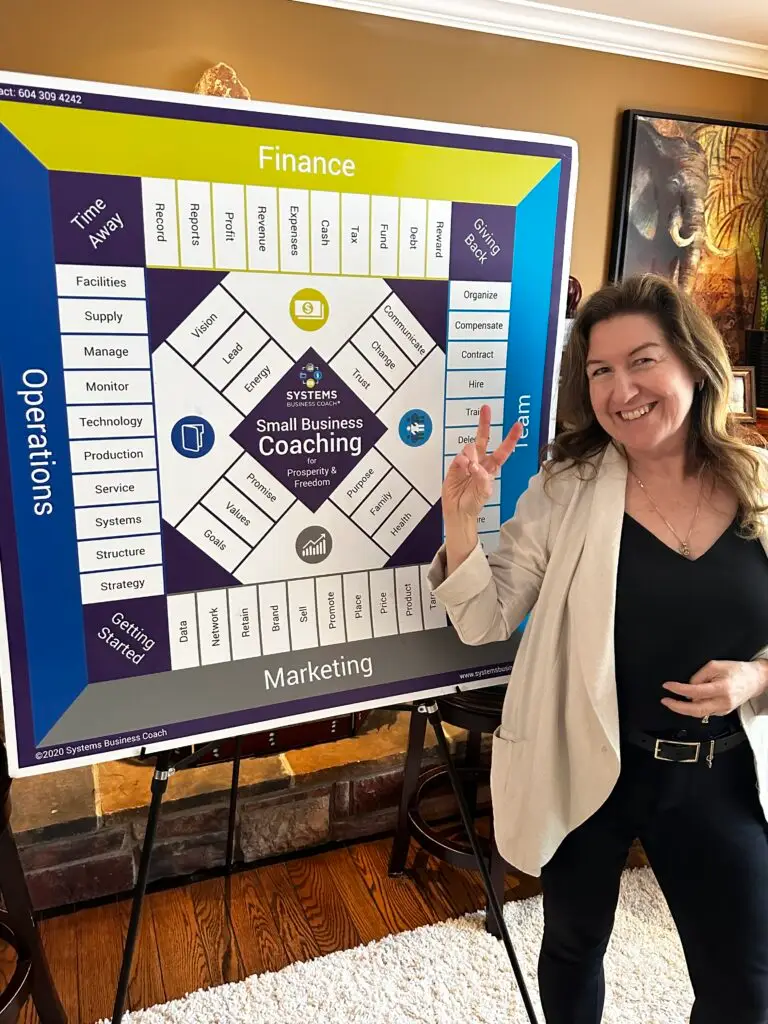
The Systems Business Coach® business-planning guide is a useful reminder that clear market, operations, and financial assumptions matter to owners. Coaches can use that context to ask better questions while leaving technical advice to the appropriate specialist.
Describe Progress Without Overpromising
Business owners want results, and ethical coaching does not promise a revenue number, a growth rate, or a guaranteed outcome. Market conditions, capital, staffing, and an owner’s capacity to implement decisions all affect the result.
Describe the business outcomes your work may support. You might help an owner clarify priorities, improve accountability, establish policies and procedures, build a more capable team, understand financial information, or create repeatable operating rhythms. Those outcomes are concrete and can contribute to a more organised small business without making claims you cannot control.
A useful positioning statement often has four parts: who you serve, the situation they are facing, the work you help them do, and the progress they seek. For example:
“I work with established local service-business owners who are overwhelmed by daily delivery. Through coaching and practical systems work, I help them clarify priorities, strengthen team accountability, and create more space for strategic leadership.”
Positioning becomes more credible when it is reflected in how you work. The ICF Code of Ethics provides a useful external reference for keeping agreements, confidentiality, role clarity, and professional responsibility visible in that work.
Choose a Method, Not Just a Message
A niche becomes credible when your delivery matches your positioning. If you say you help owners build systems, you need a repeatable way to explore how leadership, operations, finances, marketing, and team practices connect.
Systems thinking offers that wider view. When an owner says employees keep making mistakes, you can explore expectations, training, workflow, decision rights, communication, documentation, and feedback loops. The practical next step may involve a clearer role, a better process, or a conversation the owner has postponed.
Appreciative inquiry for small business coaching adds another essential dimension. Small business owners are often highly resourceful, even when the business feels difficult. A strengths-based conversation explores what has worked before, where the business is already creating value, and which capabilities can be expanded.
Practical tools turn insight into action. Depending on your scope and training, these may include business assessments, goal-setting frameworks, cash-flow conversation guides, team-role exercises, customer-journey reviews, or simple meeting structures. Tools are useful when they give owners a way to see their business, choose a priority, and follow through.
Develop Coaching Skills That Protect the Client
Business experience alone does not automatically prepare someone to coach. Owners may benefit from your knowledge, and they also need room to think. When a coach moves too quickly into diagnosis or advice, the owner can become dependent on the coach’s answers or disengage from decisions they need to own.
A professional coach approach relies on active listening, powerful questions, agreements, reflection, accountability, and ethical boundaries. The International Coaching Federation (ICF) provides core-competency guidance that helps coaches distinguish coaching from consulting, mentoring, training, and advising while recognising that each service can have a place when clearly contracted.
This distinction matters in small business coaching. You may offer a tool, teach a framework, or share an observation based on your experience. The client deserves clarity about which role you are playing. A coaching conversation can help them identify a sound decision. A consulting engagement may help them design a solution. Both can be valuable when the agreement is clear.
Training that combines coaching competencies with a small business methodology helps coaches practise those distinctions in realistic scenarios. The ICF credentialing-path resource is useful for professionals planning their wider development.
Test Your Niche Before You Cement It
You do not need a perfect brand statement before you begin. Test your niche in conversations with small business owners and referral partners. Pay attention to the language people use. If someone says, “That is exactly what I am dealing with,” your focus may be becoming clearer.
Offer a focused initial conversation, workshop, or short coaching package that addresses one business challenge. Track the questions clients bring, the progress they make, and the outcomes they value most. You may discover that your original niche is too broad, too narrow, or framed in language owners do not use.
Also test the practical economics. Consider how many clients you can serve well, the mix of one-to-one and group work you enjoy, and the time needed for preparation and follow-up. A niche that creates meaningful impact and requires constant customisation can become difficult to sustain. Repeatable structures protect quality for you and your clients.
Small business coaching tools can support this testing process when they help clients see patterns, choose a priority, and create a realistic next step.
Let Your Niche Mature With Your Practice
Your first niche does not have to be permanent. As your coaching skill grows, you may choose to serve a more defined client group, add a credential pathway, develop a group programme, or collaborate with specialists who provide services outside your scope.
What matters most is a real commitment to the people you serve. Small business owners carry responsibility for livelihoods, families, customers, and jobs. They deserve support that respects their courage and helps them see the systems they can strengthen.
Start with the owners whose challenges you understand, build the coaching capability to serve them ethically, and keep listening for the work that creates the clearest progress. A thoughtful business coaching niche can become more than a marketing label. It can become a practical way to help owners build businesses that work better for them, their teams, and their communities.
Build a Credible Small Business Coaching Practice
The Small Business Coach Foundations course develops a coach approach grounded in ICF competencies, systems thinking, appreciative inquiry, and the realities of running a small business.
Explore the Small Business Coach Foundations Course to build the skills to serve small business owners with clarity and care.