

 Beverlee Rasmussen
A credential decision can shape more than the letters after your name. For professionals comparing ACC versus PCC credentials, the real question is often this: what level of coaching capability do you need to serve small business owners well, and what path fits where you are now?
An International Coaching Federation (ICF) credential signals a commitment to ethical practice, core coaching competencies, and ongoing professional development. For a consultant, accountant, economic-development professional, advisor, or aspiring business coach, it can also provide a clear structure for shifting from giving answers to using a coach approach that helps owners think, decide, and act for themselves.
ACC versus PCC credentials: the practical difference
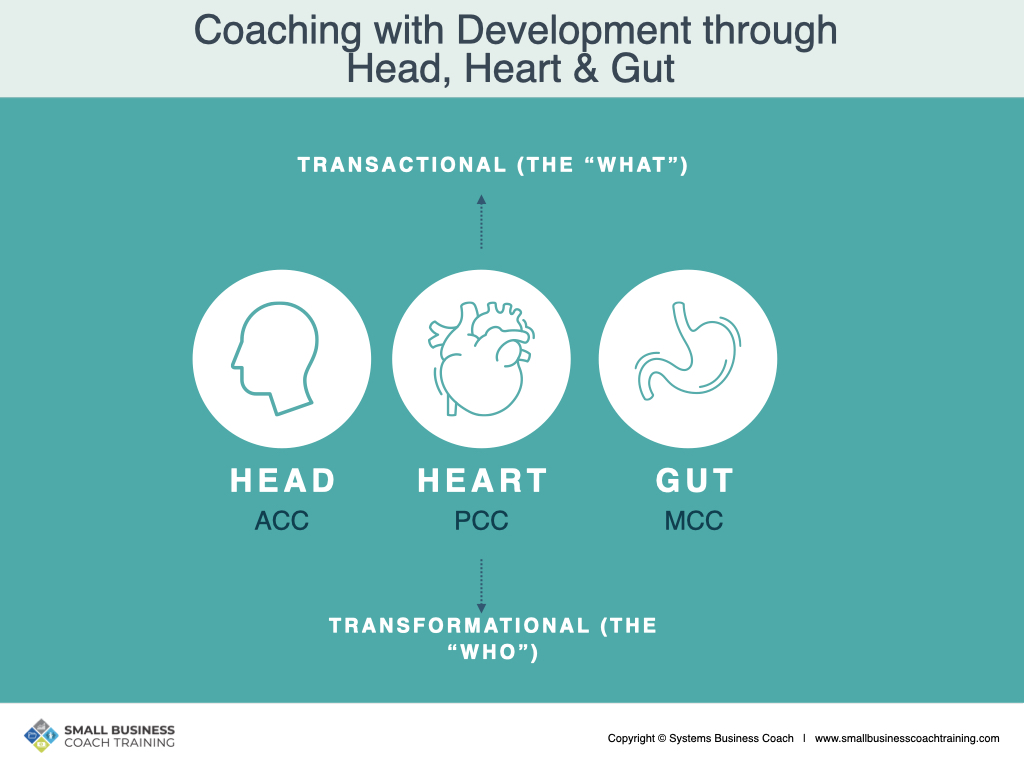
The Associate Certified Coach (ACC) credential is generally the entry-level ICF credential. It is a meaningful professional milestone for coaches who have completed foundational education, built coaching experience, and demonstrated their ability to coach in alignment with ICF standards.
The Professional Certified Coach (PCC) credential is the next level. It reflects substantially more coach-specific education and client coaching experience, along with a more advanced demonstration of coaching competency. PCC is not simply ACC with more hours attached. The progression asks coaches to work with greater depth, consistency, partnership, and awareness of what is happening beneath a client’s stated problem.
For small business coaching, both credentials can be valuable. An ACC may be an appropriate goal for a professional beginning to build a coaching practice or adding coaching skills to an existing advisory role. PCC may fit an experienced practitioner who wants to make coaching a central part of their work, serve more complex owner situations, or deepen their capacity to hold the wider systems affecting a business.
What ICF requires at each level
ICF requirements can change, so candidates may want to verify the current standards before applying. The general distinction is clear: ACC requires less coach-specific education and coaching experience than PCC, while PCC represents a more extensive professional commitment.
| Requirement | ACC | PCC |
|---|---|---|
| Coach-specific education | At least 60 hours | At least 125 hours |
| Coaching experience | At least 100 hours | At least 500 hours |
| Mentor coaching | At least 10 hours | At least 10 hours |
| Evaluation | Performance evaluation and applicable credential exam | Performance evaluation and applicable credential exam |
An ICF-accredited Level 1 program is designed to support an ACC pathway. A Level 2 program is designed to support a PCC pathway and includes the greater volume of education and observed coaching practice associated with that level.
Those numbers matter, but they do not tell the entire story. The quality and relevance of your education will influence how prepared you feel when a business owner brings up declining margins, staff turnover, unclear roles, inconsistent marketing, cash-flow pressure, or a business that depends too heavily on the owner.
The credential is not the specialty
A common mistake is to view an ICF credential as proof that a coach understands business. It proves something important: that the coach has met ICF’s standards for coaching education, experience, ethics, and competency. It does not automatically mean the coach knows how a small business operates.
Small business owners rarely experience challenges in neat categories. A marketing concern may reveal an unclear value proposition. A hiring issue may expose weak policies and procedures. A cash-flow problem may be connected to pricing, sales follow-up, operations, or an owner who has not had time to step back and make decisions strategically.
Effective small business coaching requires coaching skills and an understanding of these interconnected systems. The coach does not need to become the owner’s accountant, lawyer, marketing agency, or operations manager. Instead, the coach approach creates space for the owner to see patterns, clarify priorities, make sound decisions, and follow through.
That is why specialization matters alongside credentialing. A general coaching program may build strong listening, questioning, and presence. A specialized program adds practical context: how smaller organizations function, where owners can become bottlenecks, and how business systems can support an organized and profitable business.

When ACC may be the right next step
ACC can be an excellent choice if you are entering the profession, transitioning from another field, or testing how coaching fits into your work. It gives you a structured foundation in the ICF competencies and ethical standards while you accumulate real client experience.
It may be particularly practical for professionals who already support entrepreneurs but want to change the nature of their conversations. An economic-development advisor, financial professional, business consultant, former owner, or marketing professional may have valuable expertise. Coaching skills can help them avoid jumping immediately to recommendations and instead help clients develop ownership of their next actions.
ACC is also a sensible first goal if you want to begin serving clients while building toward PCC over time. Coaching hours are earned through actual work with clients, and that experience often clarifies the type of clients, issues, and service model you want to develop.
The trade-off is that an ACC pathway offers less total training and practice than a PCC pathway. If you already know you want a long-term career centered on coaching small business owners, starting with a program that supports PCC may prevent you from piecing together additional education later.
When PCC may be the better fit
PCC can be the stronger choice for professionals who are ready to make a deeper investment in their coaching practice. The 500-hour experience requirement means PCC candidates have spent substantial time in real coaching relationships. They have had opportunities to work through difficult client dynamics, uncertainty, competing priorities, and the slower work of behavior change.
For business coaches, this matters because owners often arrive with an urgent issue but need support at a more fundamental level. They may say they need better marketing, then discover they have not defined their ideal customer. They may want to hire quickly, then realize they lack clear roles, onboarding practices, or policies and procedures. They may need a stronger system rather than a faster fix.
A PCC-level coach is not expected to solve every business problem. But they are expected to stay grounded in the client’s agenda, listen beyond the surface, challenge assumptions respectfully, and help the client create meaningful actions. That depth can be particularly valuable when coaching founders whose decisions affect employees, customers, family finances, and local communities.
PCC may also support your professional positioning if you work with institutional partners, corporate programs, entrepreneurship centers, or sophisticated clients who recognize ICF credentials. Still, the credential alone is not a business model. Your ability to explain your specialty, earn trust, and create useful outcomes remains essential.
Choose a path based on the work you want to do
Rather than asking which credential is “better,” consider the work you want to be trusted to do in the next two to five years.
If you want a strong coaching foundation, a manageable first credential goal, and a way to begin integrating coaching into advisory work, ACC may be the appropriate starting point. If you are committed to a coaching-centered career, want more extensive development, and expect to work with complex business-owner challenges, PCC may be worth pursuing from the outset.
Also consider your available time, client access, budget, and preferred learning format. The PCC experience requirement is significant. Candidates need a realistic plan to build coaching hours with clients, not just complete training. For some, an ACC credential creates momentum and credibility while that client base grows. For others, entering a Level 2 pathway provides a more direct route toward their intended level of practice.
A practical example: choosing a credential pathway
Consider two professionals. One is a business advisor who has just started practising coaching conversations with entrepreneurs. The other has already completed substantial coach training and regularly coaches paying clients. The advisor might choose an ACC-aligned pathway to build foundational skills and gain supervised feedback. The experienced practitioner might compare their documented education and client hours against PCC requirements before choosing additional training.
Neither person should choose based on the credential label alone. A useful first step is to list completed coach-specific education, qualifying coaching hours, mentor coaching, and observed practice. Then compare those records with the current ICF application requirements and ask the training provider which gaps its program addresses.

A quick decision checklist
Before choosing an ACC or PCC pathway, ask yourself:
- Am I new to coaching, or do I already have substantial client coaching experience?
- Can I realistically complete the training and documented coaching hours for my chosen level?
- Does the program include observed practice, mentor coaching, and useful feedback?
- Will I coach small business owners, or do I need a broader coaching specialty?
- Have I checked current ICF requirements and the program’s accreditation status?
Frequently asked questions
Do I need ACC before I apply for PCC?
Not necessarily. A candidate who meets the applicable PCC requirements may pursue that credential without first earning ACC. Check the current ICF application routes for your situation.
Does a Level 2 program automatically give me a PCC credential?
No. Completing a training program and earning an ICF credential are separate milestones. You must also satisfy the applicable experience, assessment, and application requirements.
Is PCC always better for small business coaching?
Not automatically. PCC represents more extensive coaching experience, but a coach also needs to understand small business realities, maintain ethical boundaries, and communicate clearly with owners.
How long does it take to move from ACC to PCC?
There is no single timeline. It depends on the coach-specific education and qualifying client coaching hours you already have, the pace at which you work with clients, and the current ICF requirements. Review your records against the PCC application criteria before planning the next step.
Build capability, not just eligibility
The most useful training does more than prepare you to submit an ICF application. It gives you a repeatable way to serve people well.
In a small business setting, that means learning to notice the relationships among leadership, operations, finance, team communication, customer experience, and marketing. It means using appreciative inquiry to recognize what is already working while addressing what needs to change. It means bringing practical tools into a coaching relationship without taking over the owner’s decisions.
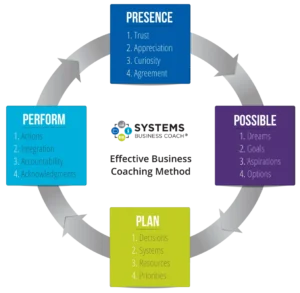
Small Business Coach Training’s Level 1 and Level 2 pathways are built around this combination of ICF-aligned coaching development and dedicated small business context. Its Effective Business Coaching Method helps practitioners work with business reality while maintaining the ethical boundaries and client partnership at the center of coaching.
A credential can open a door, but your practice is built in the conversations that follow. Choose the path that gives you enough challenge, enough real-world context, and enough time to become the kind of coach a resourceful small business owner can rely on.