


 Beverlee Rasmussen
 A small business owner may arrive with a cash-flow concern, a frustrated team, and a marketing plan that has stalled. The coach has to hear the immediate issue and also protect the quality of the coaching relationship. Clear professional standards help the coach stay useful without taking over the owner’s decisions.
For professionals who serve entrepreneurs, International Coaching Federation (ICF) standards offer a disciplined foundation for ethical, client-centred coaching. They shape how a coach contracts with clients, handles confidentiality, listens, uses business knowledge, maintains boundaries, and supports action. In a small business setting, those practices matter because the conversation can move quickly between leadership, finance, staffing, operations, and personal pressure.
ICF updated its Core Competencies in 2025 after a global job analysis involving thousands of coaches. The eight main competencies remain in place, with refinements that place greater emphasis on professional development, clarity in agreements, responsible use of knowledge, technology awareness, and sustained client growth. Coaches can review the current ICF Core Competencies and the 2025 competency comparison directly from ICF.
What ICF Standards Mean in Practice
The International Coaching Federation sets professional expectations through its Core Competencies, Code of Ethics, credentialing requirements, and education standards. Together, these frameworks describe what quality coaching looks like and what clients can reasonably expect from a trained coach.
At the center is a coach approach. Rather than positioning yourself as the person with every answer, you partner with the client to clarify what matters, explore options, challenge assumptions respectfully, and support accountability. The client remains responsible for their decisions and results.
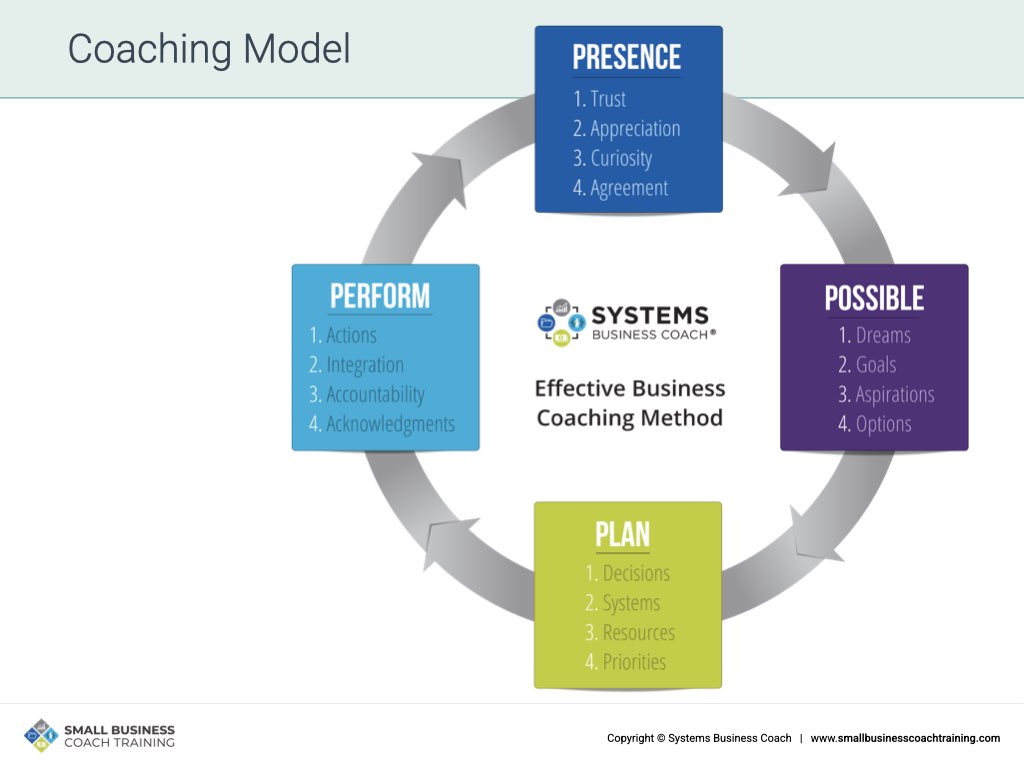
That distinction matters in small business work. Owners often want direct answers about hiring, pricing, marketing, operations, or financial priorities. They may also benefit from your experience, tools, and practical resources. ICF standards do not prevent you from sharing expertise. They ask you to be clear about which role you are playing.
A coach may ask an owner what their financial reports are showing, what assumptions sit behind a pricing decision, and what action they are prepared to take. A consultant may recommend a reporting process or pricing model. Both can be valuable. Confusion begins when a professional presents advice as coaching, or offers coaching without making the boundaries of the engagement clear.
The Core Competencies Through a Small Business Lens
The ICF Core Competencies offer a useful structure for the everyday conversations business coaches have with owners. They are not a script. They are capabilities that become more natural through practice, feedback, observation, and reflection.
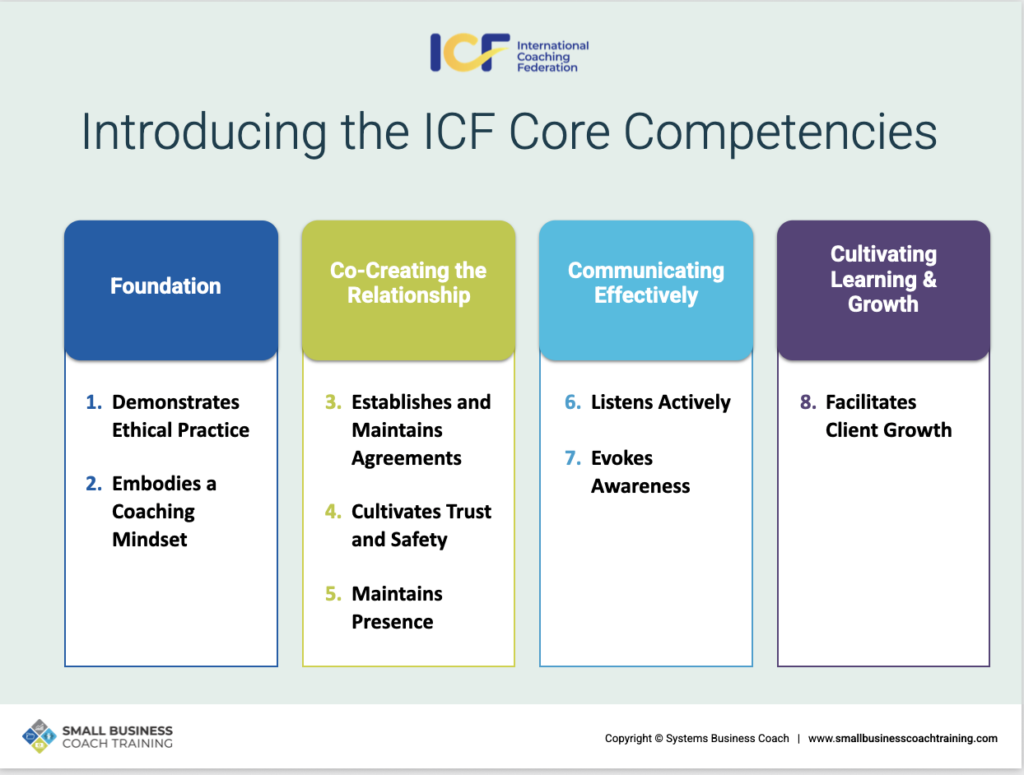
Establishing agreements that fit the business reality
A useful coaching engagement starts with a clear agreement about purpose, goals, confidentiality, roles, fees, communication, duration, and how progress will be reviewed. The agreement also needs attention during individual sessions.
An owner may begin with “I need to get the business under control.” The coach can help turn that broad statement into an outcome the owner can recognize. It might mean reviewing cash flow every week, reducing the number of decisions that require owner approval, documenting two recurring processes, or giving a manager clear authority over daily scheduling.
When a sponsor or third party is involved, agreement becomes even more important. Economic-development agencies, employers, lenders, or family members may have an interest in the engagement. The owner needs to know what information will remain confidential and what reporting, if any, has been agreed upon.
Building trust without becoming the rescuer
Business owners carry real responsibility. Their decisions affect employees, customers, family income, and community jobs. Trust is built when a coach listens without judgment, recognizes the owner’s resourcefulness, and stays present when the conversation becomes difficult.

Trust does not mean avoiding challenge. A coach may notice a gap between an owner’s stated priorities and where their time goes. They may invite the client to examine a pattern of delayed decisions, unclear expectations, or constant firefighting. The difference is that the coach does not shame the client or impose a conclusion.
Appreciative inquiry is especially useful here. It makes room for the problems without treating the business as a collection of failures. Questions about past successes, existing strengths, and moments when the system worked well can reveal assets the owner may have overlooked.
Listening for the system, not only the symptom
A request for help with staff turnover may be connected to hiring practices, onboarding, unclear roles, compensation, communication habits, workload, or the owner’s leadership style. A marketing concern may be connected to positioning, sales follow-up, capacity, customer experience, or profit margins.
Effective small business coaching requires coaching skills and an understanding of the interconnected systems within a business. ICF standards support the coaching side of that work by encouraging deep listening, awareness, and client-led learning. Systems thinking helps the coach and client see the wider business context.
The coach does not need to diagnose every issue in a single session. Instead, they can help the owner slow down enough to identify relationships between decisions, processes, people, and results. This often leads to more durable action than chasing the most visible problem of the week.
Supporting awareness and action
Insight is useful only when it changes what happens next. ICF-aligned coaching helps clients develop awareness, design actions, anticipate obstacles, and sustain learning over time.
In a small business setting, that may involve turning a broad leadership insight into a specific practice: holding a weekly operations meeting, assigning ownership for a process, reviewing a dashboard, documenting a customer follow-up procedure, or setting a decision deadline. Practical tools can support the work, but the owner needs to choose actions they understand and are prepared to carry out.
Accountability is not pressure or surveillance. It is a thoughtful review of commitments, outcomes, learning, and adjustments. If an action was not completed, the coach can explore what got in the way. The answer may reveal competing priorities, an unrealistic plan, a missing system, or a decision the client has been avoiding.
Ethics: The Standard That Protects the Relationship
The ICF Code of Ethics is not separate from effective coaching. It protects the conditions that make honest coaching possible. Clients need confidence that their information will be handled carefully, that conflicts of interest will be addressed, and that the coach will work within their competence.

For business coaches, several situations deserve particular care. Confidential business information, employee concerns, partner disputes, financial stress, and succession issues can all surface in coaching. A coach needs sound confidentiality practices and a clear understanding of any legal, organizational, or safety-related limits to confidentiality.
Ethics also means recognizing when another professional is needed. A coach is not a lawyer, therapist, accountant, financial adviser, or human resources investigator unless they are separately qualified and engaged in that capacity. When a client needs specialized support, a referral or a clearly defined shift in role may be appropriate.
This does not reduce your value. Clear boundaries build credibility. They allow clients to know when they are receiving coaching, when they are receiving education or consulting, and when a matter requires a different expert.
Using Expertise Without Losing the Coach Approach
Many professionals enter small business coaching with substantial experience. They may be accountants, former owners, marketing agency leaders, economic development professionals, consultants, or financial professionals. Their knowledge can make conversations more relevant and practical.
The trade-off is that expertise can create a strong urge to solve the problem immediately. Sometimes direct instruction is the right service. A new entrepreneur may need a basic financial process explained, or a business may ask for a consultant to help build policies and procedures. The ethical issue is not expertise itself. It is role clarity and client choice.
A useful practice is to name the options. You might say that you are hearing a coaching question about priorities and a consulting question about possible systems. Ask what would serve the client best in that moment. This protects the coaching relationship while allowing your expertise to be used intentionally.
Small Business Coach Training takes this integrated approach seriously: ICF coaching competencies and ethical standards are paired with practical small business tools, systems thinking, and methods that help owners build an organized and profitable business. The goal is not theory alone. It is to help professionals support owners in thinking clearly, deciding well, and taking meaningful action.
Choosing Training That Meets ICF Standards
If you are pursuing an ACC or PCC credential path, ICF-accredited education can provide the structured learning, observed coaching, feedback, and mentor coaching required for professional development. But accreditation is only one part of the decision.
Consider whether the program prepares you for the clients you intend to serve. General coaching education may build strong foundational skills, yet it may not address the realities of a business with fewer than 100 employees: thin capacity, uneven cash flow, owner dependence, informal processes, competing priorities, and the need to make progress without adding unnecessary complexity.
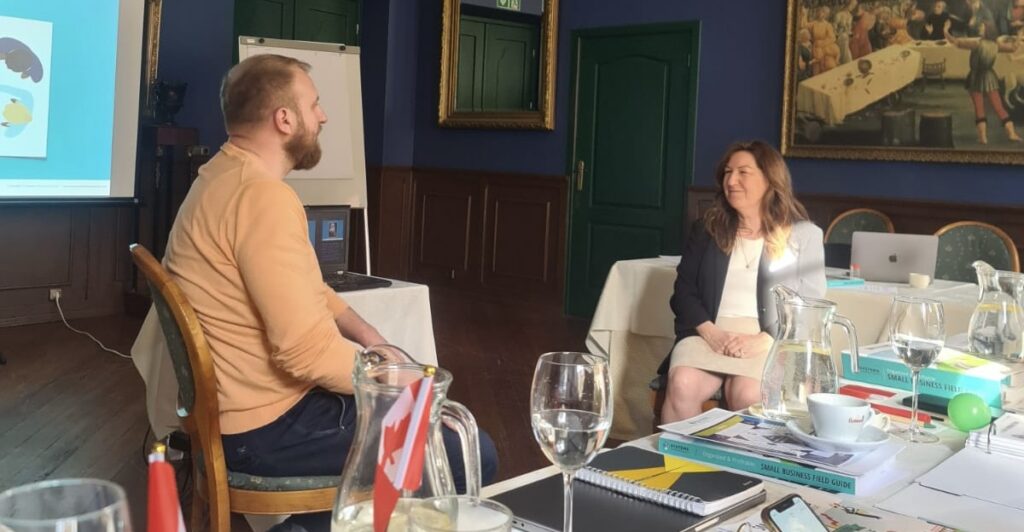
Look for training that develops both your coaching presence and your ability to understand business systems. You may want opportunities to practice with business-focused scenarios, receive feedback on recorded coaching, work with practical tools, and distinguish coaching from consulting. A specialty can help clients understand the value you bring while giving you a repeatable way to work.
A Professional Standard for Real Business Conversations
ICF standards give small business coaches a clear professional foundation: ethical practice, strong agreements, trust, presence, active listening, awareness, and client-owned action.
When those standards are paired with practical small business fluency, coaching becomes a place where owners can examine the whole situation, make informed decisions, and build capability that lasts beyond the session.
If you want to work with small business owners, you need strong coaching skills and a practical understanding of the challenges they face every day.
The Small Business Coach Foundations course develops a coach approach grounded in ICF Core Competencies, systems thinking, appreciative inquiry, and the realities of running a small business.
Start your Small Business Coach Foundations training today.