

 Beverlee Rasmussen
 A strategy session can look productive from the outside: a wall of sticky notes, a list of priorities, and an owner who leaves energized. Yet many small business owners return to a full inbox, staffing issue, or cash flow concern and never act on the plan.
To facilitate owner strategy sessions well, a practitioner needs more than a good agenda. They need a coach approach that helps the owner make sound decisions within the reality of their business.
For small businesses , strategy is rarely separate from operations.
A decision about growth may affect hiring, cash flow, capacity, marketing, service delivery, and the owner’s time. The most useful session helps an owner see those connections, choose what matters now, and create action they can carry into a demanding week.
Start With the Decision, Not the Agenda
A strategy session is not a presentation, and it is not a consultant-led planning exercise disguised as coaching. The owner may bring a broad concern such as, “We need to grow,” or “My team is not taking responsibility.” Those statements are starting points, not yet a workable focus.
Before the session, ask what decision, outcome, or situation feels most important. You might ask: “At the end of our time, what would make this session genuinely useful?” Or, “What needs to become clearer so you can move forward?” This creates a purpose the owner can recognize and evaluate.
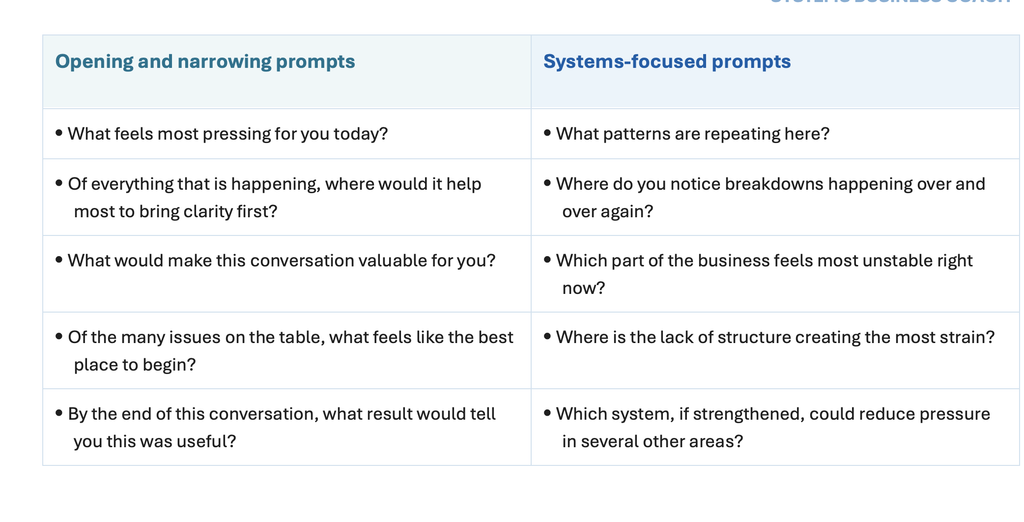
The distinction matters. “Build a better marketing plan” may be too broad for one session. “Decide which customer segment we will focus on for the next quarter” is more concrete. A clear decision gives the conversation a center while leaving room for discovery.
A short pre-session check-in can also identify relevant information. Depending on the topic, the owner may need recent sales data, a capacity estimate, a simple cash flow projection, customer feedback, or a list of current commitments. Do not turn preparation into homework for its own sake. Bring only what will help the owner make a better decision.
Facilitate Owner Strategy Sessions Through a Systems Lens
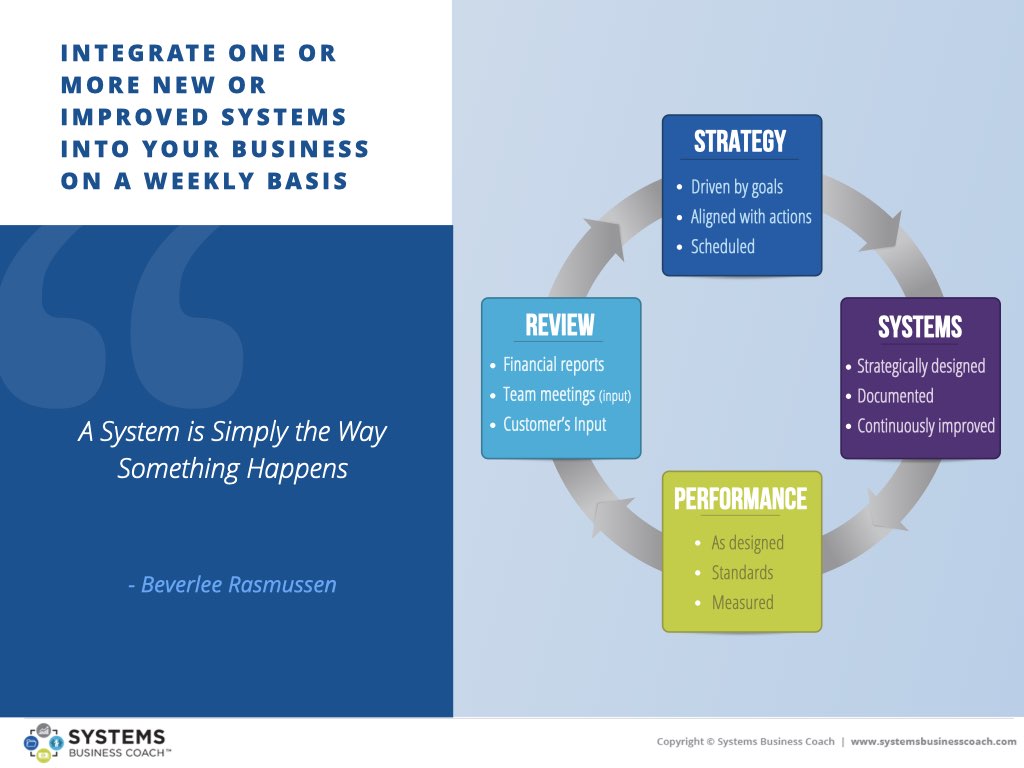
Small business coaching becomes more valuable when the practitioner can hear an issue as part of a system rather than as an isolated problem. A sales decline, for example, may involve positioning, lead follow-up, pricing, customer experience, owner confidence, or a team member who lacks clarity about their role. The goal is not to diagnose the business for the owner. It is to help them examine the system thoughtfully.
Begin by inviting the owner to describe what is happening and where it shows up. Then explore the relationships around it. Questions such as these can widen the view without overwhelming the conversation:
- “What else is affected when this happens?”
- “Where does this issue begin, and where does it become visible?”
- “What is working despite the challenge?”
- “What patterns have you noticed over the last several months?”
- “If you changed this one part of the business, what might become easier or harder elsewhere?”
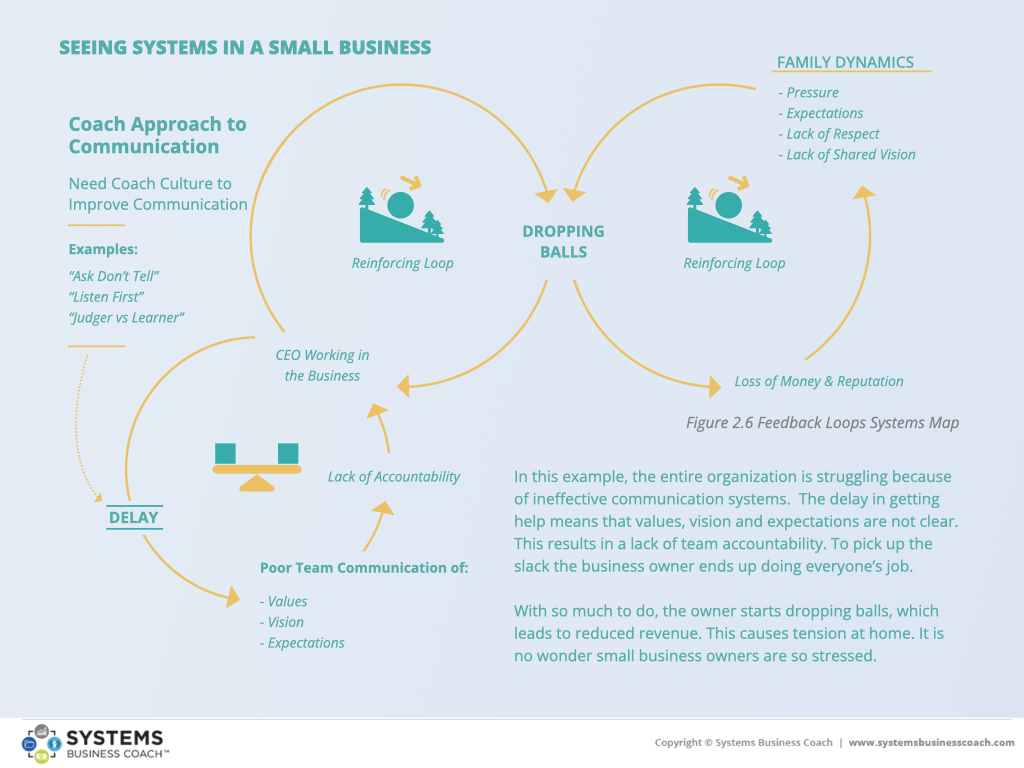
This is systems thinking in practical use. It helps an owner avoid treating symptoms while overlooking the conditions producing them. It also respects their expertise. The owner lives in the business every day; the coach creates the space and structure for them to see it differently.
Consider an owner who says their staff “keep making mistakes.” The immediate impulse may be to recommend training or accountability measures. A systems-focused conversation may reveal that expectations are undocumented, onboarding is informal, handoffs are unclear, and the owner changes priorities midweek. The useful next step could be to create a repeatable process, clarify a role, or establish policies and procedures before addressing individual performance.
Build a Session Around Four Practical Movements
A strong session has enough structure to produce movement, but not so much that the owner feels managed through a template. Four movements can provide that balance: clarify, explore, decide, and commit.
Clarify the current reality
Invite the owner to state the situation in observable terms. What is happening? Who is involved? What evidence do they have? What is the cost of leaving it unchanged? This stage can separate facts from assumptions and frustration from the underlying issue.
It may help to name constraints without treating them as permanent barriers. Time, money, staffing, skills, market conditions, and personal capacity are all real. An owner who sees constraints clearly can make a more credible plan than one who ignores them.
Explore strengths and possibilities
Appreciative inquiry brings needed balance to strategy work. Rather than focusing exclusively on gaps, ask where the business has already succeeded. When has this problem been less severe? What made that possible? Which client relationships, team capabilities, processes, or offers create the most value?
This does not mean minimizing a difficult situation. It means recognizing usable assets. Owners often have more capability, goodwill, and evidence of progress than they can see when they are under pressure.
Decide what matters now
Strategy requires choice. If every initiative is a priority, the session has not produced a strategy. Help the owner test options against the purpose they identified, the capacity of the business, likely impact, and the risks they are willing to accept.
A useful question is, “What would you be intentionally choosing not to do if you pursue this?” This brings trade-offs into the open. For one owner, adding a service line may be the right growth move. For another, it may distract from a profitable core offer that needs better systems and consistent delivery.
Avoid making the decision for them. Advice may be appropriate when your role and agreement call for it, especially if you are also serving as a consultant or advisor. Name the shift clearly. In a coaching conversation, your work is to support the owner’s thinking, autonomy, and accountability. Ethical practice, including the standards associated with ICF coaching, depends on clear roles and boundaries.
Convert insight into action
A good decision becomes useful only when it changes behavior. Close the session by asking what the owner will do, by when, and how they will know it is complete. The action may be small: schedule three customer interviews, review job responsibilities with a manager, block time to document a process, or decide which weekly metric to review.
Actions need an owner, a date, and a visible result. If the work involves a team, clarify what the business owner will communicate and what support others need. A plan that exists only in the owner’s head tends to compete poorly with daily interruptions.
Keep the Conversation Honest About Capacity
Many strategy plans fail because they assume the business has more time, cash, or management depth than it actually has. Part of facilitating well is helping owners distinguish an appealing idea from an executable commitment.
Ask what current work must change to make room for the new priority. Explore whether the owner has the authority, skills, information, and support to follow through. If the answer is no, the right next action may be to gather information, delegate a task, improve a process, or reduce the scope.
This is especially relevant when owners are the primary salesperson, service provider, manager, and problem-solver. Their business may need systems that reduce dependence on them before it can responsibly pursue growth. An organized and profitable business is not built by adding more initiatives to an already overloaded owner. It is built through clear priorities, repeatable practices, and decisions that fit the business’s present stage.
Use Practical Tools Without Letting Tools Take Over
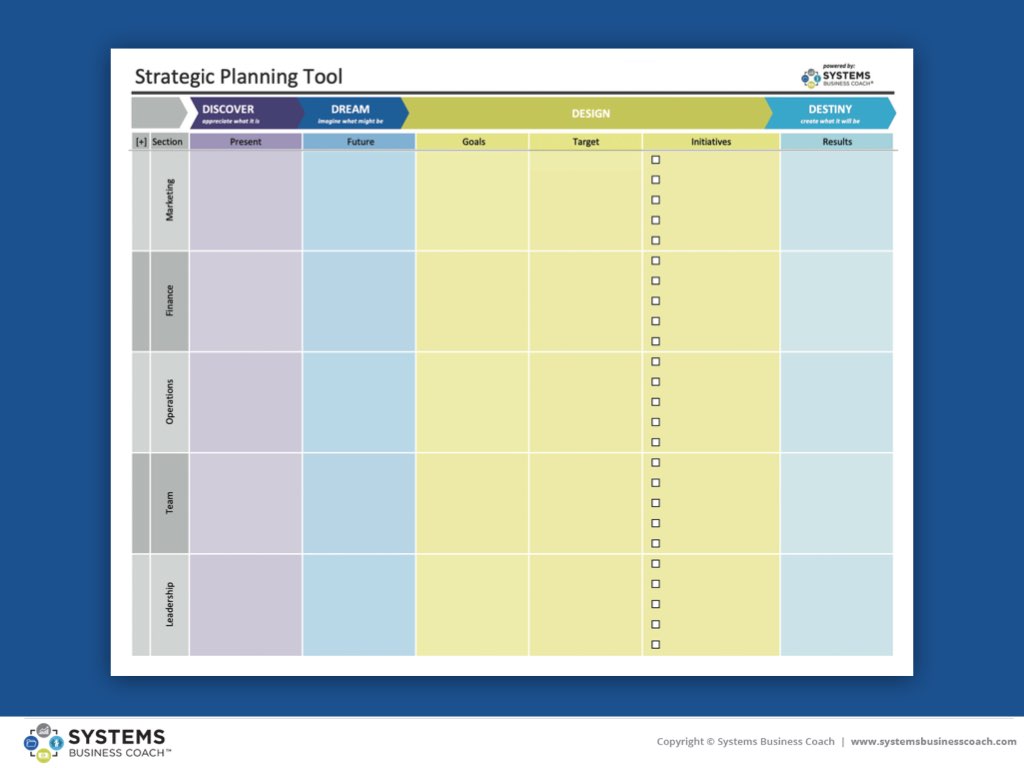
A one-page planning tool, a simple business model map, a scorecard, or a process worksheet can make an abstract conversation tangible. Tools are helpful when they support reflection and action. They become less useful when the practitioner follows the worksheet more closely than the owner’s actual thinking.
Choose a tool based on the question at hand. A quarterly priority sheet may fit an owner who needs focus. A customer journey map may help when retention is slipping. A role-and-responsibility exercise may be more useful than a revenue forecast when team confusion is the immediate constraint.
After the session, send a concise record of the owner’s decisions, commitments, and any measures they chose to watch. Their language matters. A plan written in the practitioner’s terminology can feel less compelling than one the owner recognizes as their own.
Develop the Skills Behind the Session
Effective facilitation draws on more than business knowledge. It requires listening for patterns, asking questions that create insight, managing time without rushing the owner, and staying curious when the conversation becomes complex. It also requires enough understanding of small business systems to recognize when a strategy issue may connect to finance, operations, leadership, marketing, or team practices.
That combination is why specialized small business coach training matters. Professionals from accounting, consulting, economic development, financial services, marketing, and business ownership may bring valuable expertise. Coaching skills help them use that expertise with greater discipline, so owners can think, decide, and act for themselves.
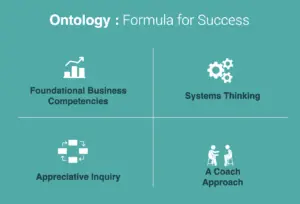
Small Business Coach Training prepares practitioners to bring together coaching competencies, systems thinking, appreciative inquiry, and practical business tools. The aim is not to turn every conversation into a planning session. It is to help professionals recognize when an owner needs space to make a strategic choice and how to guide that space toward meaningful business outcomes.
The next time an owner arrives with a long list of urgent concerns, resist the urge to organize every answer for them. Help them identify the decision beneath the noise, examine the system around it, and choose one action that their business can genuinely carry forward.
Want to Strengthen the Way You Support Small Business Owners?
If you work with small business owners and want to explore how coaching skills can strengthen those conversations, book a 30-minute conversation with Systems Business Coach® founder Beverlee Rasmussen.
Together, you can explore how small business coach training could support the work you already do and help you bring a more intentional coach approach to the owners you serve.